When bulldozers started pouring sand over the swampy land between the Sava and Danube rivers in 1948, few could have imagined that this area would evolve into today’s New Belgrade — the modern, dynamic district that now defines Belgrade’s skyline.
The vision was bold: to create a planned, spacious, and green “city within a city,” designed to relieve pressure from Belgrade's old town and provide homes for thousands of newcomers from across Yugoslavia.
The early days of New Belgrade
Commonly referred to as a “bedroom neighborhood”
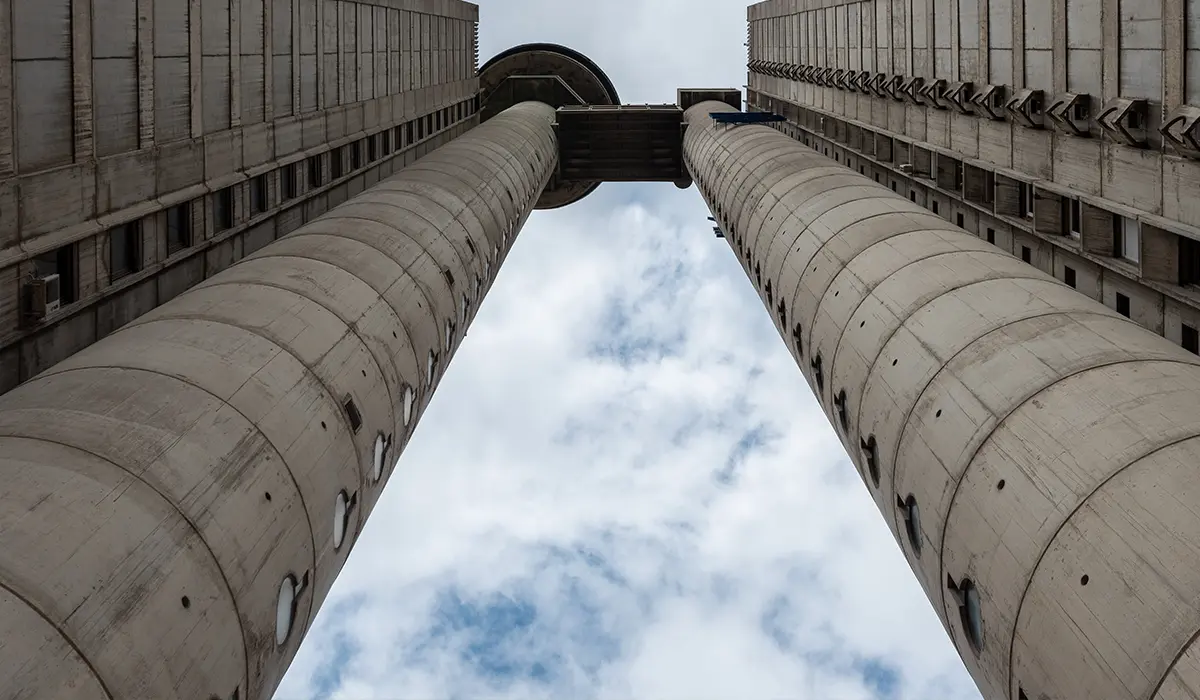
The first architectural plans and competitions that would define New Belgrade began in 1947. Nikola Dobrović, one of the leading modernist architects of Yugoslavia, laid the conceptual foundations of the district.
The design followed the principles of The Functional City, a concept introduced by Le Corbusier and detailed in the 1933 Athens Charter, which outlined the ideal urban environment. According to it, apartments were to receive at least two hours of sunlight even in winter; residential blocks were to be set back from noisy roads; and green spaces between buildings were to be reserved for recreation and socializing.
The government’s ambition was for New Belgrade to symbolize a new socialist beginning — an administrative and political heart of post-war Yugoslavia. However, as the 1950s progressed, those plans were abandoned, and the vast empty plots were filled with residential buildings. That’s how New Belgrade earned its early nickname: “the dormitory.”
From socialist ideals to transition: the awakening of the dormitory
By the late 1980s, as the Yugoslav dream began to fade, New Belgrade stood at a crossroads. Its wide boulevards, vast open areas, and available land were waiting for a new purpose.
Small workshops, private firms, and the first offices began appearing on the ground floors of apartment blocks. On the corners of the so-called “bloks,” little shops and cafés started to emerge — and the district quietly began to wake up.
One of the early symbols of that awakening was Enjub, the first modern shopping center in New Belgrade, opened in the late 1980s. Soon after came YU Business Center, a contemporary office building designed to host the growing number of private companies — an early signal of a new economic era.
It was as if New Belgrade itself sensed the change of times: a residential municipality was slowly transforming into a business hub. Then came the 1990s.
The 1990s: Quiet shift amid chaos and crisis
While factories were closing and inflation soared across the country, New Belgrade, with its characteristic grid of blocks, began to discover a new identity. Businesses, agencies, and repair shops opened inside large apartments and abandoned warehouses.
Old residential buildings were repurposed into offices, and many enterprises that once operated in central Belgrade crossed the Sava River — drawn by larger, cheaper spaces.
It was a time of uncertainty and improvisation, but also the birth of the first true entrepreneurial spirit.
A new millennium, a new identity
At the turn of the millennium, New Belgrade experienced a real boom. With economic stabilization and the arrival of foreign investors, the district became the heart of a construction wave unseen before in Serbia.
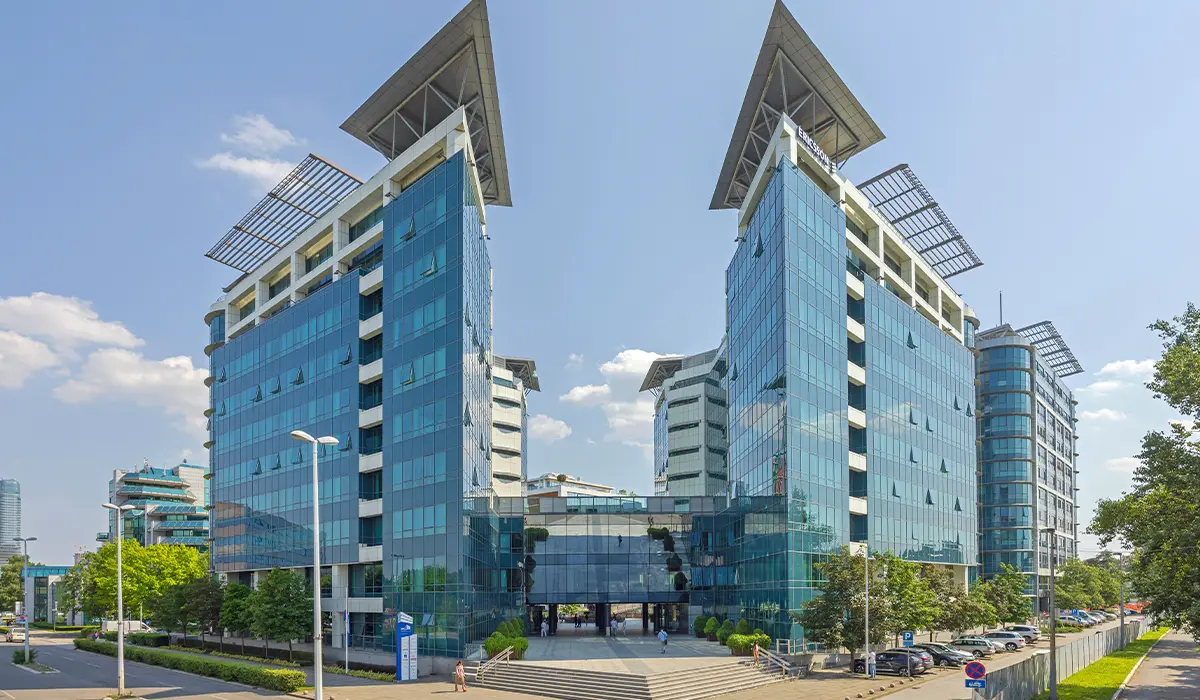
In Block 65, on the site of Belgrade’s first airport, Airport City — Serbia’s first business park — opened in 2006. Where airplanes once landed, glass towers now rise: sleek offices, ground-floor cafés, and wide sidewalks reminiscent of Western business districts.
Delta City, opened in 2007, became Belgrade’s first truly modern shopping mall, featuring cinemas, restaurants, retail stores, and underground parking. It was developed by Delta Holding in cooperation with Israeli architectural firm MYS Architects, known for dozens of major commercial projects worldwide.
Shortly afterward, another landmark emerged — the Ušće Shopping Center, built on the symbolic site of the former Yugoslav Communist Party headquarters.
Today, New Belgrade never sleeps
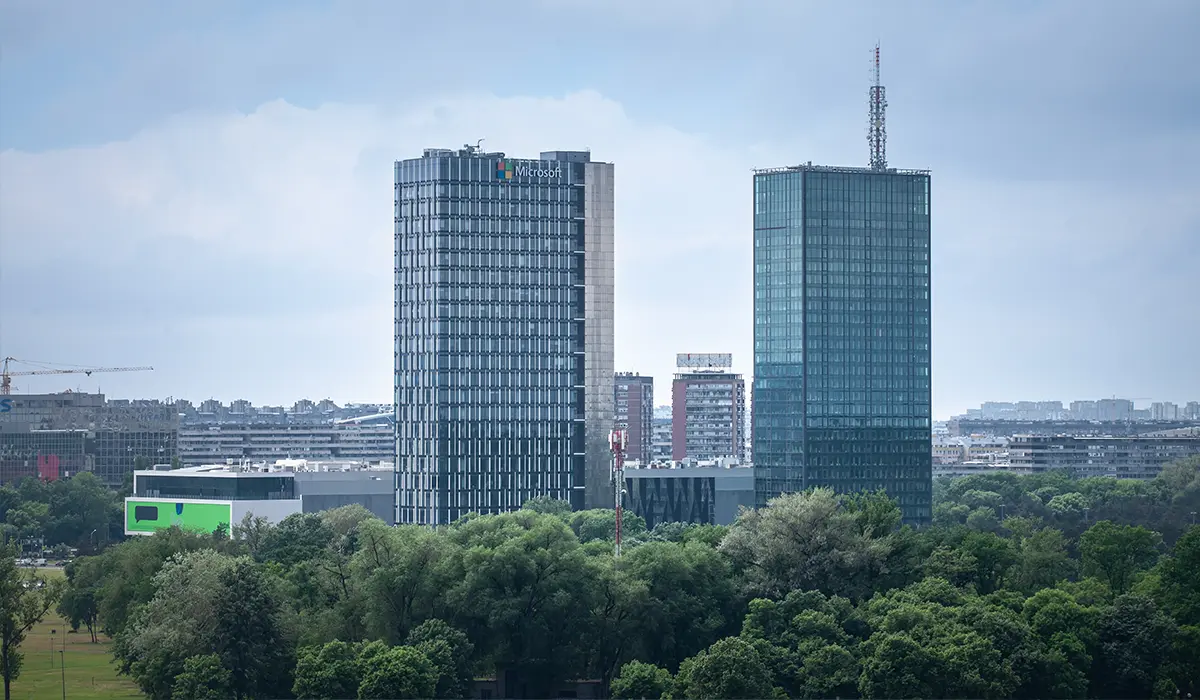
It’s hard to call New Belgrade a “dormitory” anymore. Today, this district doesn’t rest — its people work, build, negotiate, and drink morning coffee between meetings. People have lunch on office terraces overlooking the Sava River, and business towers line the skyline from Ušće to West 65.
New Belgrade has become Serbia’s largest business center — a crossroads of ambition, investment, and contemporary architecture.
This website uses cookies. If you want to know more about the concept of cookies and how to turn them off, see the Cookie Policy. By continuing to use this website, you consent to our use of these cookies.